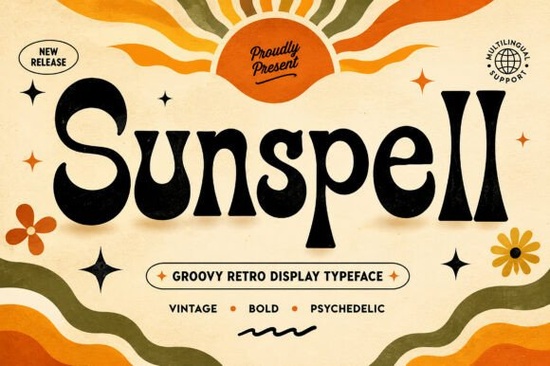
If you're looking for a bold, retro display font that captures the warmth and energy of 70s design without feeling dated or overly kitschy you’ll likely enjoy Sunspell Font. It’s not just another vintage-inspired typeface. Its flowing curves, high-contrast letterforms, and relaxed organic rhythm make it feel hand-drawn but carefully crafted, giving your work instant personality and approachability. Whether you’re designing a limited-run t-shirt, a small-batch product label, or an album cover for an indie band, Sunspell adds character without demanding attention in the wrong way.
When does Sunspell work best?
Sunspell shines where visibility and vibe matter more than fine print readability. Think headlines, logos, packaging, social media banners, and merch designs not body text or long-form editorial layouts. Its uppercase and lowercase sets are both included, so you can mix tone and hierarchy thoughtfully. The numbers, punctuation, and symbols also follow the same playful, slightly uneven rhythm, helping maintain visual consistency across your whole design.
It’s especially well-suited for creators who value authenticity over polish: small-batch makers, indie publishers, vinyl label owners, and crafters selling on Etsy or Redbubble. If your brand leans into nostalgia but with sincerity, not irony Sunspell fits naturally alongside earthy textures, warm paper stocks, and analog photography.
How does it compare to other retro display fonts?
Unlike some retro fonts that lean heavily into sharp angles or rigid geometry, Sunspell feels soft and human. It shares some DNA with mid-century signage and psychedelic poster art, but avoids caricature. You’ll notice subtle variations in stroke weight and gentle asymmetry details that suggest craftsmanship rather than algorithmic precision.
For example, Welcome Font offers a friendlier, more rounded take on retro charm, while Jennies House Font leans into cottagecore whimsy. Departure Board Font brings travel-poster authority, and Varsity Spirit Font delivers collegiate boldness. Sunspell sits somewhere between all of them sun-drenched, confident, and quietly confident.
Real projects where Sunspell makes sense
- T-shirt designs Especially for music festivals, wellness brands, or local coffee shops wanting a laid-back yet memorable look.
- Book covers Fiction titles with nostalgic, coming-of-age, or counterculture themes benefit from its warmth and texture.
- Album artwork Works beautifully for lo-fi, psych-folk, or soul revival projects where mood matters as much as message.
- Packaging for small-batch goods Think herbal tea blends, handmade candles, or craft sodas that want to signal care and individuality.
- Social graphics Standalone quote cards or event announcements gain presence without needing extra illustration.
You don’t need advanced typography knowledge to use Sunspell well. Start simple: pair it with a clean sans-serif (like Montserrat or Inter) for contrast, or layer it over grainy textures or muted color palettes. Avoid pairing it with other highly decorative fonts let it breathe. And because it’s a display font, keep sizes generous: 48pt and up works best for headlines; smaller uses risk losing its expressive details.
What’s actually included and what to expect
The download includes uppercase letters, lowercase letters, numerals, standard punctuation, and common symbols. No ligatures or alternates but that’s intentional. Sunspell was designed to be straightforward and consistent, not overwhelming. You’ll get immediate usability without digging through stylistic sets or OpenType features.
It’s compatible with most major design tools (Adobe Creative Cloud, Affinity apps, Canva Pro, Cricut Design Space), and comes in OTF and TTF formats. No subscription required just one-time purchase, lifetime access.
If you’ve tried other retro fonts and found them too stiff, too busy, or too hard to integrate, Sunspell is worth testing side-by-side with your current favorites. Try it on a mockup of your next project before committing many designers find it clicks faster than expected.
Before downloading: Check your software’s font activation method (especially if using Canva or Silhouette Studio), and confirm file compatibility. Keep a backup copy of the font files outside your design app folder this helps avoid reinstallation if you switch computers or update software.
Next step: Pick one upcoming project maybe a summer sale banner or a new product label and set aside 20 minutes to test Sunspell against your usual go-to font. Compare how it changes the tone, even with identical layout and color. That small experiment often tells you more than any description ever could.
Try It Free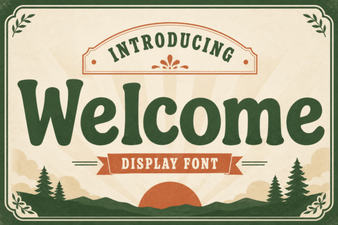 Discover the Perfect Welcome Font for Your Project
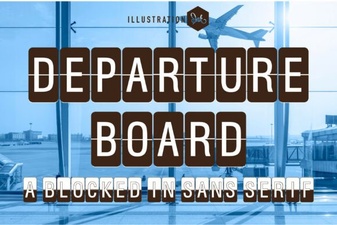 Font Design Inspired by Travel Departure Boards
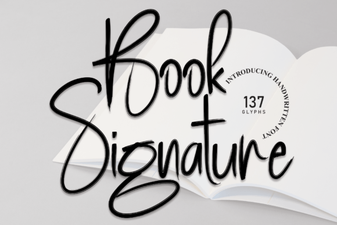 Craft Your Own Signature Font for Books
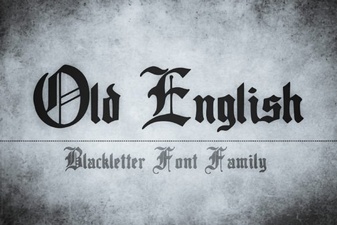 Old English Font Inspiration & Modern Uses
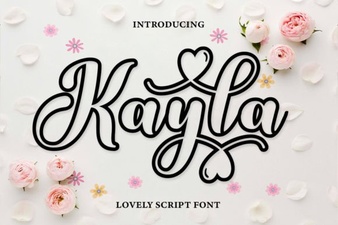 Kayla Outline Font Design Ideas & Projects
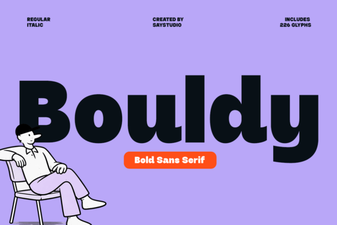 Bouldy Font: Designs That Stand Out