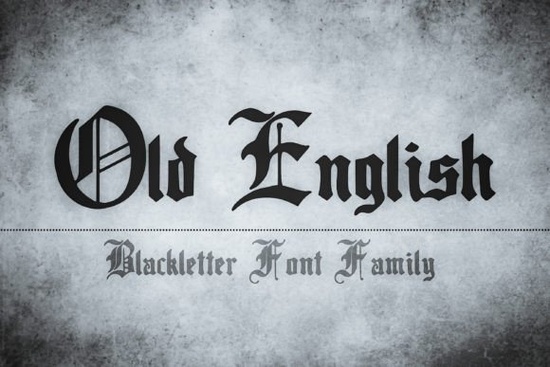
If you're looking for a font that brings authentic medieval character to your designs without needing a history degree Old English Font is a straightforward, well-crafted choice. It’s not a decorative script or a modern reinterpretation; it’s a carefully digitized blackletter typeface rooted in historical letterforms, with balanced spacing and clear glyph distinctions. That means it works reliably in both digital and print settings whether you’re laying out a book cover, designing a craft fair banner, or preparing files for vinyl cutting.
When does this font actually work well?
Blackletter fonts like Old English Font shine in contexts where tone and tradition matter more than speed or neutrality. Think wedding invitations with a gothic or vintage theme, brewery labels leaning into heritage brewing, or school crest designs for private academies. It also fits naturally in historical reenactment groups, local museum exhibits, or genealogy projects places where visual authenticity supports the message.
That said, it’s not ideal for body text or long paragraphs. The dense, angular shapes slow reading at small sizes. But as a display font used for headlines, logos, monograms, or short phrases it holds up beautifully. Many designers pair it with a clean sans-serif (like Montserrat or Lato) for contrast: bold blackletter for impact, simple type for clarity.
How does it compare to other blackletter options?
Not all blackletter fonts are built the same. Some are overly ornate, with excessive flourishes that don’t scale down cleanly. Others simplify too much and lose their historic feel. Old English Font strikes a middle ground: it retains the rhythm and weight of traditional broad-nib pen strokes but includes OpenType features like ligatures and alternate characters so you can refine details without switching fonts.
You’ll find similar stylistic energy in fonts like Gotisch Font or Medieval Script Font, but each has its own personality. Gotisch leans more rigid and formal; Medieval Script adds subtle calligraphic flow. If your project needs gravitas and timelessness not whimsy or fantasy Old English Font is often the most grounded option.
What file formats and uses are supported?
The download includes standard OTF and TTF files, so it installs easily on Mac and Windows. You can use it in Canva (via upload), Adobe Illustrator, Cricut Design Space, Silhouette Studio, and most major design tools. It’s also compatible with commercial printing workflows just make sure to outline text before sending to a printer if you’re using vector-based output.
For print-on-demand sellers, this font works especially well on apparel (think hoodies or tote bags with short, bold phrases), mugs, and wall art. Since it reads clearly even at medium sizes, it avoids the “blurry at small scale” issue some blackletter fonts face. Just avoid tiny embroidery applications stitch counts won’t capture the fine details.
Where can you see it in action without guessing?
Before committing, try pairing Old English Font with real project examples. For instance:
- A local apothecary’s business card, using the font for the shop name and a clean serif for address details
- A Dungeons & Dragons campaign poster, where the font anchors the title while illustrations carry the fantasy tone
- A family crest SVG for laser-cut wood signs its strong verticals cut cleanly on most machines
It’s also worth checking how it renders on screen versus paper. Some blackletter fonts look sharper in print than on monitors. With Old English Font, the contrast between thick and thin strokes remains legible across devices especially when used at 24pt or larger.
If you’d like to explore more options in the same style, you can browse blackletter fonts with an antique English feel. That page groups similar fonts by structure and use case not just keywords so you can compare based on actual design needs.
A quick checklist before you use it
- ✅ Test readability at your intended size especially if it’ll appear on fabric or signage
- ✅ Outline or convert to paths before final export for cutting or printing
- ✅ Avoid all-caps long blocks blackletter was historically written in mixed case; lowercase letters add rhythm
- ✅ Pair thoughtfully a neutral secondary font prevents visual fatigue
- ✅ Check licensing this version includes commercial use rights, but always verify permissions for your specific platform or product
Start with one strong headline or logo lockup. See how it feels next to your imagery and colors. If it adds weight without overwhelming if it feels right, not just “old” you’ve found your match.
Get Started Craft Your Own Signature Font for Books
 Kayla Outline Font Design Ideas & Projects
 Discover the Perfect Welcome Font for Your Project
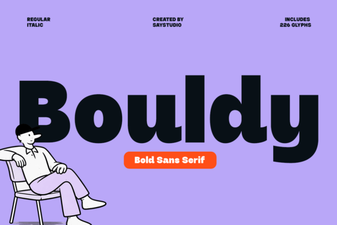 Bouldy Font: Designs That Stand Out
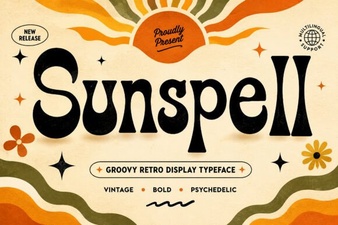 Sunspell Font: Crafting Digital Atmospheres
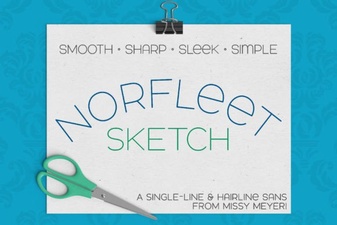 Designing with the Norfleet Sketch One-Line Font